Wednesday, June 27, 2012

Lowering the standards on Christian fiction

I addressed this a bit on my other blog, and I have addressed the issue of cursing a few times already, but its been really bugging me.

There was a lot of discussion about a book that recently came out, My Stubborn Heart, by Becky Wade, published by Bethany House Publishers. There was a lot of dicussion on one blog - I can't remember it to link, and a newer Christian author, Mike Duran, blogged about it, actually thanking Bethany House "for dabbling in language and subject matter that is typically deemed taboo in Christian fiction circles." I wouldn't call the words she used curse words, but vulgar and inappropriate for a Christian book, and aren't words a Christian should be throwing around, even in a book. Duran's post really bugged me, and I commented either there or on the other blog that referenced him that he was basically saying "yeah for being vulgar! Yeah for offending people!" Oddly enough, the two books I have read by him contain nothing like the language he was cheering on. He writes for Charisma House, and I can't see them allowing it.

Other publishers have had worse words. Thomas Nelson led it, and Zondervan and Waterbook/Multnomah has joined the cursing bandwagon. I don't like to put in print any of the words, for someone would try to paint me as hypocrtical for sure, so let me get them across without saying them. These have appeared in Christian fiction:

1) The "d" word
2) The "s" word"
3) "King James Donkey"
4) Vulgar term for urinate
5) Hell, used as an expletive

Those are the worst, though Waterbrook topped that with a non-fiction book I just read. They had mutiple uses of the "f-word" abbreviated, but in a way that they may as well used it. Add "ing" to the word, take out the "uc", and that is what they used.

I am disturbed by this trend, and disturbed by those who defend it. I had a woman who claims to be a Christian admit she would have no issue with even the above word being used, and even sex scenes in Christian fiction. Really?! If we drag Christian fiction down that low, why even bother calling it that? Why even have it?

Adam Blumer, who though he only has one book under his belt, feels very strongly as I do. We had messaged back and forth some about the Becky Wade novel, and in an email to him, I asked this: "if these authors want to put cursing in their books, then why don't they just write secular?" He replied "Why not just write for secular? Because it's cool to be a Christian author who pushes the line and goes against convention." And I think he nails it. (Check out Adam's book, Fatal Illusions).

There are people who condemn and look down on Christian fiction. I have heard people refer to Christian novels in the same tone they would talk about some major sin of the day. And I'd like to briefly address that. Not all Christian ficion is equal. Some is just fluff. There is wide variety of Christian fiction: romance, suspense, historical, sci-fi - you name it, its there. Some just entertains, which there is nothing wrong with that. Some can encourage, inspire, even convict. There have been times in my life where I was struggling spiritually, and something I read in a Christian fiction book was a help to me. Jesus told stories often to make a point, so I think there is definite possibility of  Christian fiction book being a help.

That said, why not cursing in Christian books?

1) First off, Christians should not curse and use foul language. We are to be different. If we went around using curse words all the time, what kind of witness for Christ would we be? Not a very good one. Would you use that kind of language in front of your pastor and people from church? In front of your kids?

If there are words Christians should not use, and I think - I hope - we agree that there are - then why is it acceptable to put them in a book? If I let off with a string of profanity right here on my blog, would that make it ok since my mouth wasn't saying it? Of course not!!! And neither does it make it ok when it is in a book being spoken by a fictional character. It is still cursing, and it is still wrong.

One of the "pro-cursing" crowd on the one blog I mentioned, made the point that some words are offensive to some people and not others, trying to use the excuse its ok to use certain words, because not everyone is offended by the same words, and not everyone considers the same words to be vulgar and cursing. I replied and said if it is a word you wouldn't want your kid to blurt out in front of the pastor, or a word you wouldn't want certain people to hear you use, then it probably falls into the category of vulgar or cursing. It doesn't take rocket science to know what words are curse words and/or vulgar.

2) Christians are commanded in the Bible to not offend our brothers. Granted, this could be taken to extremes, but come on people..... cursing cannot be excused from this. It seriously boggles my mind that I have had Christian authors defend cursing in their books and not be apologetic at all about it, yet I have had non-Christians apologize for using those same words around me, and I never said a word. They knew I was a Christian, and knew I didn't talk like that.

3) It is tearing down the lines between secular and Christian fiction. If there is cursing in Christian fiction, and God forbid, sex scenes, which will be next - then why have Christian fiction at all? There should be differences between the two, and one difference is language. If there is no difference between secular and Christian, then why have Christian?

I never watched much TV, not having one after the age of 11, so maybe that is one reason this is a big issue to me. I haven't been as desensitized to it as people who watch a lot of TV. I don't know. Maybe that isn't the reason, but why are so many Christians ok with cursing in Christian books? I seriously don't get it.

One woman told me we should leave it up to the author. Maybe they have a reason for doing it, and its between them and God. I politely disagree. When I buy a Christian book, I expect certain things from it, and one is no cursing/vulgarity. It isn't just between them and God.

3) Even non-Christians get it. I was talking to a friend of mine who doesn't claim to be a Christian and its evident by their life. I was talking about the language in this one Christian book I had read. They were shocked. "That was in a Christian book?! You're kidding!" This person was truly shocked and said it shouldn't be in there. If a non-Christian gets that, why can't Christians?

There are probably other reasons people smarter than me could come up with, but those are a couple I came up with.

A while back I read and reviewed a book by Susan May Warren, Sons of Thunder. It had one use of the "d-word", and my sister and I both sent her a polite email about it. She replied and said that was the word her character would have used, and she wanted to stay true to his character. I thought this  - and think I replied to her - "so if he was the kind of guy to say the "f-word", would you have used it? Authors are creative, and can get across what kind of person the character is without him actually using the word.

Some time before I read the above book, I read a novel by Noel Hynd (Zondervan Publishing). It was suspense and centered around the FBI. Great plot and writing, but...... it had several language issues. What most people could classify as cursing. I remember the "d-word" and "King James Donkey", and there was one or two others, used more than once. I sent him a polite email. He replied that you cannot write that kind of novel without using that kind of language. You.Have. Got. To. Be. Kidding. (Then he should stick to secular!) I have read a lot of that kind of book that didn't use that kind of language. Maybe Mr. Hynd needs to meet Bob Hamer. Bob is a former FBI agent who has written two great Christian books about an FBI agent. And guess what....... no cursing. Wow. If a real, live, former FBI agent can do it, then I would wager a guess that even Mr. Hynd can do it. He just doesn't want to, and doesn't care. That was the last book I read by Noel Hynd.

I've thought a lot about this issue of Christians being different from the world/non-Christians. Nothing is wrong anymore. Even sexual sins are accepted by some churches and Christians, so I guess it should be no surprise that Christians would defend cursing.

This statement will go not go over well. I know we are not to judge, but the same Bible also says people will be known by their fruits. If a person claimed to be a Christian, and was continually cursing around other Christians, and when confronted about it being offensive, just kept doing it...... what would we think of their Christianity? Really - what would we think? So if a person who claims to be a Christian author and publisher keeps cursing in their books, and when confronted and told it is offensive, and they keep doing it........ well, fill in the blanks.

To condemn sinful and un-Christian behavior can get you labeled narrow-minded by even other Christians (check out Mike Duran's blog, he infers that). And that is sad. So I am sure I will get that label.

Just think, not that many years ago, people on TV and radio got bleeped out for the same words that are appearing in Christian novels. Wow, what wonderful progress. Can we honestly think that is ok, and even worse, like Mike Duran, cheer on profanity?

I've thrown this idea out before, but doubt it will happen, but if Christian publishers and authors are going to insist on putting vulgar language and cursing in their books, then I suggest a couple of ideas:

1) Put a notice on the back of the book. Something like "This book contains some language that could be offensive to some people"

2) Make a special imprint for books that contain that kind of language, and market it as such.

Sound dumb? I don't think so. We rate movies, why not books?

In closing, I'd like to share something Michael Hyatt, CEO of Thomas Nelson, had on his blog. They are standards for their books. I commented once and said I don't think cursing in their books line up with the standards. He didn't agree, nor did I think he liked the comment. Read them and see what you think...... with the standards he outlines, should not their books - and all Christian books - be held to a higher standard, language-wise, and others?

It can also be found here.
"At Thomas Nelson, we often refer to ourselves as “a Christian content company.” However, we understand our identity as a Christian content provider in a very different way than most of our competitors.

Like them, we want all of our messages to be delivered from the perspective of a Christian worldview. This is the foundation of our content program. However, unlike many of them, our communicators are free to explore any subject they wish.
Yes, we publish content and host conferences on spiritual and devotional themes. This is part of life and, from our perspective, the most important part. But it is not the only part.We also deliver content that deals with the other aspects of life: business, culture, politics, entertainment, etiquette, cooking, family, etc. And, of course, we publish fiction. Lots of it! No topic is off limits, provided it comes from a Christian worldview, is executed well, and has commercial value. (We are, after all, a commercial content provider.)
Theologically, our vision flows from our conviction that God is sovereign. He doesn’t preside over part of the world (the “religious sphere”), leaving the rest autonomous (the “secular sphere”). No, He rules over all of it. Ultimately, there is no secular/sacred dichotomy. Because God is the Creator and ruler over all, any field of human inquiry can be explored—and sanctified.
To say it another way, all truth is God’s truth. Some of the content we distribute will beexplicitly Christian (mentioning the name “Jesus” or citing specific Bible verses); other content will be implicitly Christian (never referencing anything spiritual). Both are acceptable and appropriate, depending on the communicator’s purpose and audience. The important thing is that the content flow out of a Christian worldview.
And that necessarily begins with the communicator. As a result, our standards focus on the content originator. This doesn’t mean that the content is unimportant. Quite the contrary. But it does reflect our belief that content flows out of a worldview and, ultimately, out of a writer or speaker’s heart (cf. Matthew 12:34, 35). To say it another way, we want to align ourselves with people who share our vision, our mission, and our values. “How can two walk together unless they agree” (Amos 3:3)? This is where it starts.
Specifically, we want to publish and promote:
  1. Communicators who profess a personal faith in Jesus Christ. We want to work with people who are willing to say, “I am a Christian.” We do not try to judge their profession or assess the validity of their faith. Only God knows their hearts (1 Samuel 16:7). Nevertheless, we want to work with communicators who claim to be Christians and are not ashamed of it.
  2. Communicators who embrace the central truths of historic Christianity.Such ancient documents as the Apostles’ and Nicene Creeds are simply convenient summaries of these truths and nearly all Christians can agree on them. Beyond these basic truths, we want to allow latitude—and even disagreement!—on non-core doctrines.
  3. Communicators who seek to live according to the standards of biblical morality. We do not expect perfection. We acknowledge that all Christians—even Christian communicators—fall short of God’s standards. But we want to promote communicators who are committed to living in obedience to God’s revealed will. We want to promote communicators who “walk the talk.”
Beyond these standards, there is freedom. Philippians 4:8 provides the inspiration for an expansive content program. It says,
Finally, brethren, whatever things are true, whatever things are noble, whatever things are just, whatever things are pure, whatever things are lovely, whatever things are of good report, if there is any virtue and if there is anything praiseworthy—meditate on these things.”
Notice the word whatever. It is repeated six times and then followed by the word anything.Based on this verse, we believe that Christians are free to think, write, or speak about anything—whatever they want!—provided it meets eight minimal criteria:
  1. It must be true. This means that it must be authentic and must correspond to reality. We want to promote content that embraces reality as God created it, not content that “sugar coats” reality or tries to make reality something it is not.
  2. It must be noble. This means that it must raise us up and make us more like God. The opposite is to debase or degrade. We want to promote content that ultimately motivates people and calls forth their best qualities.
  3. It must be just. This means it must be righteous or consistent with the commandments of God. It also means it must be fair. We want to promote content that promotes righteousness and godly living. By the way, this doesn’t mean that novels can’t have evil characters. (There are plenty of them in God’s story.) But it does mean that in the end righteousness is rewarded and evil punished—if not in this life, the next.
  4. It must be pure. This means it must be chaste, modest, clean. We want to promote content that promotes holiness and offers a necessary corrective to current trends to sexualize everything. This does not mean that we are opposed to sex, of course. But we want to make sure that our content advocates a view of sex that is consistent with Christian morality.
  5. It is lovely. This means it must be aesthetically pleasing or beautiful. We want to publish communicators who are committed to beautiful writing and speaking. Bothwhat is said and how it is said are important. Beauty is not a means to an end. It is an end in itself, because it reflects the beauty of the Creator.
  6. It is of good report. This means it must be commendable or of high reputation. Again, the emphasis is on that which represents the best, that which anyone could read or hear and agree that it is well-written or well-spoken.
  7. It is virtuous. This means it must affirm behavior which is consistent with the highest values. Values that don’t manifest themselves in behavior are merely platitudes. We want to promote content that challenges people to live lives of moral excellence and virtue.
  8. It is praiseworthy. This means it must be worthy of recommendation; something you can personally endorse. At the end of the day, we want to promote content we are proud of, books or conferences that we are willing to recommend to a family member or friend with the confidence that they will wowed and grateful that they took the time to enjoy it.

The reason we have content standards is because we want to be faithful to Christ as we fulfill His call on our lives. And we also want our customers to be able to trust us. We want people to have confidence that our products are consistent with a Christian worldview, are created by people who profess to be Christians and are striving to walk the talk, regardless of the subject matter they may be addressing."

Tuesday, June 26, 2012

The Search by Shelley Shepard Gray


This week, the
Christian Fiction Blog Alliance
is introducing
The Search
Avon Inspire; Original edition (June 19, 2012)
by
Shelley Shepard Gray


ABOUT THE AUTHOR:


Since 2000, Shelley Sabga has sold over thirty novels to numerous publishers, including HarperCollins, Harlequin, Abingdon Press, and Avon Inspire. She has been interviewed by NPR, and her books have been highlighted in numerous publications, including USA Today and The Wall Street Journal.


Under the name Shelley Shepard Gray, Shelley writes Amish romances for HarperCollins’ inspirational line, Avon Inspire. Her recent novel, The Protector, the final book in her “Families of Honor” series, hit the New York Times List, and her previous novel in the same series, The Survivor, appeared on the USA Today bestseller list. Shelley has won the prestigious Holt Medallion for her books, Forgiven and Grace, and her novels have been chosen as Alternate Selections for the Doubleday/Literary Guild Book Club. Her first novel with Avon Inspire, Hidden, was an Inspirational Reader’s Choice finalist.


Before writing romances, Shelley lived in Texas and Colorado, where she taught school and earned both her bachelor’s and master’s degrees in education. She now lives in southern Ohio and writes full time. Shelley is married, the mother of two children in college, and is an active member of her church. She serves on committees, volunteers in the church office, and currently leads a Bible study group, and she looks forward to the opportunity to continue to write novels that showcase her Christian ideals.


When she’s not writing, Shelley often attends conferences and reader retreats in order to give workshops and publicize her work. She’s attended RWA’s national conference six times, the ACFW conference and Romantic Times Magazine’s annual conference as well as traveled to New Jersey, Birmingham, and Tennessee to attend local conferences.


Check out Shelley's Facebook Fan page


ABOUT THE BOOK


In the second book in her Secrets of Crittenden County series, New York Times bestselling author Shelley Shepard Gray delivers another page-turning romance set in Amish country


The serenity of the quiet Amish community of Crittenden, Kentucky is disrupted when Abby Anderson discovers the body of Perry Borntrager in an abandoned well. Perry had been missing for months. Everyone figured he had left the order during his rumspringa. As friends and family reel from this news, and are faced with the first death by mysterious circumstance to occur in their small town in over 20 years, a homicide detective arrives to help solve the crime


Before Perry disappeared, Frannie Eicher and Perry had been secretly courting. Now that it’s common knowledge that he was murdered, it’s up to Fannie to decide whether or not to tell everyone about the secrets he told her.


After much deliberation, she decides to tell Luke Reynolds, the visiting police officer, what she knows. At first, the two meet only on the context of discussing Perry’s death. Then, Luke begins to feel more and more at home, both with Frannie, and in Marion. The only problem is that he feels a romantic pull toward Frannie. Frannie feels that same attraction toward Luke, but is afraid to give her heart to him. After all, she doesn’t want to leave her faith.


As Luke uncovers more secrets about Perry and the case draws out, his time in Marion runs out. He has to decide whether to go back to his job with the Cincinnati Police Department…or stay in Marion.


If you would like to read the Prologue of The Search, go HERE.

Monday, June 25, 2012

The Scarlet Thread by Francine Rivers

Two women, centuries apart, are joined through a tattered journal as they contend with God, husbands, and even themselves . . . until they fall into the arms of the One who loves them unconditionally. Sierra Madrid’s life has just been turned upside down when she discovers the handcrafted quilt and journal of her ancestor Mary Kathryn McMurray, a young woman who was uprooted from her home only to endure harsh conditions on the Oregon Trail. Though the women are separated by time and circumstance, Sierra discovers that many of the issues they face are remarkably similar. By following Mary Kathryn’s example, Sierra learns to surrender to God’s sovereignty and unconditional love.

My review:

I read The Scarlet Thread years ago when it first came out, but read it again a few weeks ago when I got some books out of my storage unit, and enjoyed it as much as the first time.

This is a love story, which I typically steer clear of, but its more than that. It is one woman's search for God after a move from everything and everyone she knows, and after a failed marriage.

The book is two stories. One that happens now, and the other in a diary that the main character is reading. I quickly became bored with the diary and started skipping it entirely, and feel it didn't detract from the main story much. I have talked to others who read the book and enjoyed the diary part of the book, so maybe I'm the only one who didn't get into that. Regardless, this is a great book, one of the best Francine Rivers ever wrote, and is one I'd recommend.

About the author:

New York Times best-selling author Francine Rivers began her literary career at the University of Nevada, Reno, where she graduated with a bachelor of arts degree in English and journalism. From 1976 to 1985, she had a successful writing career in the general market, and her books were highly acclaimed by readers and reviewers. Although raised in a religious home, Francine did not truly encounter Christ until later in life, when she was already a wife, a mother of three, and an established romance novelist.
Shortly after becoming a born-again Christian in 1986, Francine wrote Redeeming Love as her statement of faith. First published by Bantam Books and then rereleased by Multnomah Publishers in the mid-1990s, this retelling of the biblical story of Gomer and Hosea, set during the time of the California Gold Rush, is now considered by many to be a classic work of Christian fiction. Redeeming Love continues to be one of the CBA's top-selling titles, and it has held a spot on the Christian best-seller list for nearly a decade.

Since Redeeming Love, Francine has published numerous novels with Christian themes—all best sellers—and she has continued to win both industry acclaim and reader loyalty around the globe. Her Christian novels have been awarded or nominated for numerous honors, including the RITA Award, the Christy Award, the ECPA Gold Medallion, and the Holt Medallion in Honor of Outstanding Literary Talent. In 1997, after winning her third RITA Award for inspirational fiction, Francine was inducted into the Romance Writers of America's Hall of Fame. Francine's novels have been translated into over 20 different languages, and she enjoys best-seller status in many foreign countries, including Germany, the Netherlands, and South Africa.

Francine and her husband, Rick, live in northern California and enjoy time spent with their three grown children and taking every opportunity to spoil their grandchildren. Francine uses her writing to draw closer to the Lord, and she desires that through her work she might worship and praise Jesus for all He has done and is doing in her life.

The Scarlet Thread is available from Tyndale Publishing.

Sunday, June 24, 2012

The Tehran Intiative

The world is on the brink of disaster, and the clock is ticking. Iran has just conducted its first atomic weapons test. Millions of Muslims around the world are convinced their messiah—known as the Twelfth Imam—has just arrived on earth. Israeli leaders fear Tehran, under the Twelfth Imam’s spell, will soon launch a nuclear attack that could bring about a second Holocaust and the annihilation of Israel. The White House fears Jerusalem will strike first, launching a preemptive attack against Iran’s nuclear facilities that could cause the entire Middle East to go up in flames, oil prices to skyrocket, and the global economy to collapse. With the stakes high and few viable options left, the president of the United States orders CIA operative David Shirazi and his team to track down and sabotage Iran’s nuclear warheads before Iran or Israel can launch a devastating first strike.

My review:

I read and reviewed the first book in this series, The Tweflth Imam, and thoroughly enjoyed it. I couldn't wait for the next book to come out, and it finally did. It starts where the first book left off and launches right into fast-paced drama, suspense, and international intrigue.

Rosenberg has created a great character in David Shirazi. He is a CIA agent, but is a very complex individual. I enjoyed reading more about him and seeing even more character development done on him.

Joel Rosenberg knows his "stuff." Although this is a fictional series, he brings a lot of non-fiction into the books. I liked The Tehran Initiative even more than the first book and could not put it down until I finished it. Awesome book. I am looking forward to the next one.

About the author:

Joel C. Rosenberg is the New York Times best-selling author of seven novels—The Last Jihad, The Last Days, The Ezekiel Option, The Copper Scroll, Dead Heat, The Twelfth Imam, and The Tehran Initiative—and two nonfiction books, Epicenter and Inside the Revolution, with more than 2.5 million copies sold. The Ezekiel Option received the Gold Medallion award as the "Best Novel of 2006" from the Evangelical Christian Publishers Association. Joel is the producer of two documentary films based on his nonfiction books. He is also the founder of The Joshua Fund, a nonprofit educational and charitable organization to mobilize Christians to "bless Israel and her neighbors in the name of Jesus" with food, clothing, medical supplies, and other humanitarian relief.
As a communications advisor, Joel has worked with a number of U.S. and Israeli leaders, including Steve Forbes, Rush Limbaugh, Natan Sharansky, and Benjamin Netanyahu. As an author, he has been interviewed on hundreds of radio and TV programs, including ABC's Nightline, CNN Headline News, FOX News Channel, The History Channel, MSNBC, The Rush Limbaugh Show, The Sean Hannity Show, and The Glenn Beck Show. He has been profiled by the New York Times, the Washington Times, the Jerusalem Post, and World magazine. He has addressed audiences all over the world, including those in Israel, Iraq, Jordan, Egypt, Turkey, Russia, and the Philippines. He has also spoken at the White House, the Pentagon, and to members of Congress.

In 2008, Joel designed and hosted the first Epicenter Conference in Jerusalem. The event drew two thousand Christians who wanted to "learn, pray, give, and go" to the Lord's work in Israel and the Middle East. Subsequent Epicenter Conferences have been held in San Diego (2009); Manila, Philippines (2010); and Philadelphia (2010). The live webcast of the Philadelphia conference drew some thirty-four thousand people from more than ninety countries to listen to speakers such as Israeli Vice Prime Minister Moshe Yaalon; pastors from the U.S., Israel, and Iran; Lt. General (ret.) Jerry Boykin; Kay Arthur; Janet Parshall; Tony Perkins; and Mosab Hassan Yousef, the son of one of the founders of Hamas who has renounced Islam and terrorism and become a follower of Jesus Christ and a friend of both Israelis and Palestinians.
The son of a Jewish father and a Gentile mother, Joel is an evangelical Christian with a passion to make disciples of all nations and teach Bible prophecy. A graduate of Syracuse University with a BFA in filmmaking, he is married, has four sons, and lives near Washington, D.C.

To visit Joel's weblog—or sign up for his free weekly "Flash Traffic" e-mails—please visit www.joelrosenberg.com.

Please also visit these others Web sites:
www.joshuafund.net
www.epicenterconference.com
and Joel's "Epicenter Team" and the Joel C. Rosenberg public profile page on Facebook.

Friday, June 22, 2012

Angel Eyes by Shannon Dittemore

Once you’ve seen, you can’t unsee. Everything changes when you’ve looked at the world through . . .
ANGEL EYES
Brielle went to the city to chase her dreams and found tragedy instead. She’s come home to shabby little Stratus, Oregon, to live with her grief and her guilt . . . and the incredible, numbing cold she can’t seem to shake.
Jake’s the new guy at school. The boy next door with burning hands and an unbelievable gift that targets him for corruption.
A realm that only angels and demons—and Brielle—can perceive.

My review:

There have been several books on the Christian fiction market lately involving angels, but this one is different from what I have read so far. The story doesn't focus on the angel as much as two teenage kids who both have a unique gift.

This book is geared for young adults and is a great book for that intended audience, though I really enjoyed it. The book does center around two teenagers, but adults will still enjoy the book.

Kids being kidnapped and sold into sexual slavery is dealt with in the book, and we are given a look at what might be happening behind the scenes of the supernatural world as good and evil battle.

The author created a couple of great and likable characters and spun a great plot around them. This is a book I would recommend for the teenagers in my life. Great book. And I am looking forward to the other two in this trilogy, even though I am an adult.

About the author:

Shannon is a wife and mother. A sister. A daughter. A friend. She was raised in Northern California by her parents—pastors of their local church and constant figures of inspiration.
As a youth, Shannon traveled with an award-winning performing arts team, excelling on stage and in the classroom. As a young adult, she attended Portland Bible College, continued acting, and worked with an outreach team targeting inner-city kids in the Portland-Metropolitan area.

It was in Portland that she met her husband, Matt. They were married in 2002. Soon after, they took the reins of the youth ministry at Living Way Community Church in Roseville, California where they continue to serve in that capacity. In October of 2004, their son Justus was born, followed by their daughter Jazlyn, born in 2008.
Angel Eyes is Shannon’s debut novel and the launch of a young adult supernatural trilogy.

Angel Eyes is available from Thomas Nelson.

Thanks to Thomas Nelson and Litfuse for the review copy.

 
Win a Nook Color from Shannon Dittemore (@ShanDitty)! "Angel
Eyes" Giveaway and Facebook Party {6/26}
Enter Today - 6/9-6/25!


Celebrate with Shannon by entering her "Angel Eyes" Giveaway and connecting with
her during the Author Chat Party on 6/26!


Find out what readers are saying here.


One "angelic" winner will receive:

  • A Brand New Nook Color
  • A copy of Angel Eyes by Shannon Dittemore

Enter today by clicking one of the icons below. But hurry, the giveaway ends at
noon on June 25th. Winner will be announced at the "Angel
Eyes" Author Chat Facebook Party on 6/26
. Shannon will be hosting a book
chat, testing your trivia skills and giving away some great prizes!

So grab your copy of Angel Eyes and join Shannon on the evening of the June
26th for a chance to meet Shannon and make some new friends. (If you haven't read the
book - don't let that stop you from coming!)


Enter via E-mail Enter via FacebookEnter via Twitter


Don't miss a moment of the RSVP
today. Tell your friends via FACEBOOK or TWITTER and increase your chances of winning. Hope to see you
on the 26th!

Thursday, June 21, 2012

Fearless by Eric Blehm

Fearless takes you deep into SEAL Team SIX, straight to the heart of one of its most legendary operators.

When Navy SEAL Adam Brown woke up on March 17, 2010, he didn’t know he would die that night in the Hindu Kush Mountains of Afghanistan—but he was ready: In a letter to his children, not meant to be seen unless the worst happened, he wrote, “I’m not afraid of anything that might happen to me on this earth, because I know no matter what, nothing can take my spirit from me.”

Long before Adam Brown became a member of the elite SEAL Team SIX—the counterterrorism unit that took down Osama bin Laden—he was a fun-loving country boy from Hot Springs, Arkansas, whose greatest goal had been to wear his high school’s football jersey. An undersized daredevil, prone to jumping off roofs into trees and off bridges into lakes, Adam was a kid who broke his own bones but would never break a promise to his parents.
But after high school, Adam fell in with the wrong crowd and his family watched as his appetite for risk dragged him into a downward spiral that eventually landed him in jail. Battling his inner demons on a last-chance road to redemption, Adam had one goal: to become the best of the best—a US Navy SEAL.


An absorbing chronicle of heroism and humanity, Fearless presents an indelible portrait of a highly trained warrior who would enter a village with weapons in hand to hunt terrorists, only to come back the next day with an armload of shoes and meals for local children. It is a deeply personal, revealing glimpse inside the SEAL Team SIX brotherhood that also shows how these elite operators live out the rest of their lives, away from danger, as husbands, fathers and friends.

Fearless is the story of a man of extremes, whose courage and determination was fueled by faith, family, and the love of a woman. It’s about a man who waged a war against his own worst impulses and persevered to reach the top tier of the US military. Always the first to volunteer for the most dangerous assignments, Adam’s final act of bravery led to the ultimate sacrifice.

Adam Brown was a devoted man who was an unlikely hero but a true warrior, described by all who knew him as fearless


My review:
This is the second book I read and reviewed this month, but the two are totally different.

The first part of the book is about Adam's years before becoming a SEAL. The book pulls no punches and doesn't gloss over his failures and drug addictions. It shows what a great guy and SEAL he was, yet also shows how the greatest men can have a weakness and struggle.

This is a very inspiring story. In part, because of Adam's perseverance to be a Christian and get victory over his drug addictions, but also because of the things he went through to become and stay a SEAL.

This book went into more detail than the other I reviewed about their activities in battle and out in the field, and it helped me gain a better appreciation and thankfulness for what our military do and go through to fight for our freedoms. The book had its sad moments, but overall it is a great story of a great military hero.

I was disappointed in the language in the book. Yes, men curse in the military, but Waterbrook is a Christian publisher and should not have allowed the language that appears in the book. I counted multiple uses of 4 curse words, and two other words that just don't belong in a Christian book (the vulgar words for urinate and illegitimate children). Also, they used an abbreviated version of the "f" word ending in ing and only removed the "u" and "c", replacing it with a dash. That is way too close to using the actual word, and they do that at least 5 times.

If you're willing to overlook the cursing, then this is a book I'd recommend. It tells the story of a great military hero and also of how God changed and used him.

About the author:

Eric Blehm is the best-selling author of The Only Thing Worth Dying For, which recounts the harrowing story of the first Special Forces A-team to infiltrate Taliban-held southern Afghanistan weeks after 9/11. It was a New York Times and Wall Street Journal bestseller. The author’s The Last Season, winner of the National Outdoor Book Award, was named by Outside magazine as one of the ten “greatest adventure biographies ever written.” Blehm lives in California with his wife and children.

Fearless is available from Waterbrook/Mutlnomah Publishing.

Thanks to Waterbrook/Multnomah Publishing for the review copy.


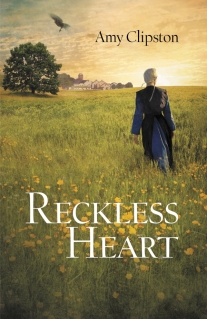
Reckless Heart by Amy Clipston

Lydia Bontrager's youngest sister is frighteningly ill, and as a good Amish daughter, it falls to Lydia to care for her siblings and keep the household running, in addition to working as a teacher's assistant and helping part time at her grandmother's bakery. Succumbing to stress, Lydia gives in to one wild night and returns home drunk.

The secret of that mistake leaves Lydia feeling even more restless and confused, especially when Joshua, the only boy she's ever loved, becomes increasingly distant. When a non-Amish boy moves in nearby, Lydia finds someone who understands her, but the community is convinced Lydia is becoming too reckless. With the pressures at home and her sister's worsening condition, a splintering relationship with Joshua, and her own growing questions over what is right, Lydia could lose everything that she's ever held close.


My review:

I don't read many Amish fiction books, but was offered a couple of juvenile fiction books to review and this was one of them, and since I am always on the look out for good books for my nephews and nieces, I decided to review this one.

Reckless Heart deals with a couple of issues: leukemia, and a young Amish girl being torn between two worlds. I thought the author did a great job of portraying the struggle and the pressure one would feel in that situation.

There is a lot of discussion about Amish fiction and whether they portray the Amish in the right light, and maybe some do not, but I felt this one did. The plot and story line were done very well, and though written for young adult, adults who like Amish fiction will enjoy this book also.

About the author:

Amy Clipston has been writing for as long as she can remember. Her fiction writing "career" began in elementary school when she and a close friend wrote and shared silly stories. After living in New Jersey and Virginia, Amy now lives in North Carolina with her husband, Joe; two sons, Zac and Matt; mother, Lola; and three spoiled rotten cats, Molly, Ashlee, and Jet.

Reckless Heart is available from Zondervan Publishing.

Thanks to DJC Communications for the review copy.